As I write this post, a long underrated team of underdogs is celebrating achieving their just rewards, rightfully being praised for world class excellence in the field of football, and has a Champions League final to look forward to, to top it all off.
But enough about RTÉ, I’m here to talk about two other three letter abbreviations that are almost as controversial as what comes out of Eamon Dunphy’s mouth; PSG and RBL. The game that occurred last night between the boys from Paris and the boys from Leipzig.
Let’s start with PSG, because to be frank, it is easier to explain why they are repugnant in the eyes of the football fan, or indeed any casual observer. They are one of only two clubs in the world owned by a state (in the literal sense, though more on that later), and an über-wealthy Gulf state at that. As Richie Sadlier stated last night, they are a team that through their successes legitimise in some way the human rights abuses that take place in the Qatari state and that this is quite transparently the objective aim. It does not require further explanation as to why the ownership of the Qatari government of a Champions League finalist is problematic.
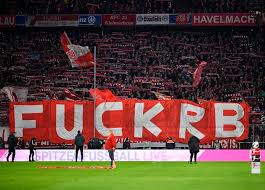
When trying to explain why ”Lawn Ball Sports Leipzig” are as repugnant to football, as many have done this week when this unholy semi-final was created, it is tougher. Red Bull do not advocate for the criminal punishment of homosexuals, as far as I am aware. They do not imprison or torture journalists. They do not even spend all that much to distort the game – their entire team last night cost less than the most reviled player in the world playing at the equally reviled PSG. They play football the right way, they have an exciting and progressive manager, and an electric young squad. They have provided a true contender from the former German Democratic Republic, often seen as left behind both in football and German society. They did so in a major city which was one of the worst underachievers in Europe in terms of footballing quality – Leipzig was, for a period of time, the biggest city in Europe with no team in the top three leagues domestically. And yet, to many, they are worse than the Qataris.
The reason for this is relatively simple – RBL do not care about football. One bit. Red Bull’s owner, Dietrich Mateschitz, has effectively said as much – on record as promoting the brand of Red Bull through the medium of Leipzig the city, and RBL the club as its primary aim. Their movements in German league football have been offensive to local fans in a way PSG have not. ‘Buying the league’ is a familiar refrain to fans the world over at a hated, wealthy club. ‘Destroying the fabric of our league’ is a relatively new one. They have done this in multiple ways – maliciously subverting the German membership ‘50+1’ rule so that effective power is consolidated in a very small handful of wealthy Red Bull stakeholders, literally buying a club (SSV Markranstadt) in order to absorb their registration rights, and showing outright disrespect and naked corporate ambition in the one major league that remains committed to the idea of football as a social and institutional hub.
There is a reason why Nick Hornby’s anecdotes of being thrilled, depressed, exhilarated and deflated week in, week out following Arsenal became so wildly popular and revered among football fans. He is us. We are emotional and irrational about our football clubs – I personally think that whatever price Bohemians are to win the Europa League is too high, and I haven’t even looked at what price it is yet. RBLs cold corporatism is a slap in the face to people who think like Nick Hornby and to people who dream about football like I and millions of others do. It is also not quite an accusation you can level at the Qataris – while I doubt the Emir of Qatar is checking the fixture list for ‘when we get one over on those Marseille c**ts’, there is a reason why roughly 400 million Euros were spent on Neymar and Kylian Mbappe. Football is incidental to the Qatari project – we all know that. The problem is that they nevertheless do still act like a team that wants to be the best in the world – they’re in the Champions League final, and whether they succeed or fail in any given season, they are covered with the same gusto as any top European team. Regardless of what RBL do or don’t do with their team, their success is explicitly stated to be a means to a marketing end.
This is the argument boiled down to its essence – yes, PSG’s owners are worse for humanity as a whole, but RBL’s owners are worse for football. In any event, most are in agreement that both are akin to a cancer on elite European club football, and almost all are in agreement that both should be stamped out. Does this argument hold up? Can RBL really be mentioned in the same breath as PSG in terms of poisoning the game? Could they actually be worse for football? And most importantly, where is the line?
As a Manchester United fan, I followed the Manchester City case in front of the Court of Arbitration for Sport with some interest. I did so for all of the wrong reasons, as did many United fans, and indeed many City fans. For me, the result was crucially significant in determining whether or not 5th place would be sufficient for United to obtain Champions League football in the season just gone. If United did not get Champions League football, they would not be able to present Borussia Dortmund with an offer of up to 120 million Euros for Jadon Sancho. It now looks like this deal will not happen anyway. United’s major transfers get signed off on by a family who have already signed off on the acquisition of Tom Brady and Rob Gronkowski this year, not to mention the historic donations to Donald Trump’s political ambitions, and have taken over a billion in revenue generated by Manchester United out of the club. Belts will need to be tightened somewhere, and it won’t be in the country the capital and the decision makers are located. For this reason, I and many other Manchester United fans wanted the Court of Arbitration for Sport to rule that City had breached Financial Fair Play Regulations and would thus be banned from Europe.
Manchester City (the only other literal state-owned club, owned by the Emirati government) and Pep Guardiola see their victory over CAS as something to be celebrated, a lesson taught to an inert, myopic elite full of old white European men jealously guarding the keys to the castle for the same old clubs. They see UEFA as a rival almost on a par with historic rivals Manchester United and new competitive rivals Liverpool, openly boo the UEFA anthem at their games, and co-opt the ‘UEFA Mafia’ slogan adopted by ultras at faded European giants in less glamorous footballing countries, faded precisely due to the acute concentration of eye-watering wealth in the elite leagues. Once again, a footballing principle intended to be for the have-nots has had its message corrupted by one of the richest clubs in world football.
Strident criticism of this ruling came in the form of a manager who came to define football rivalry for many years at the highest level alongside Guardiola – Jose Mourinho. They defined such rivalry at Real Madrid and Barcelona – both of whom receive sizeable support from state and local government respectively. Indeed, Real Madrid and Barcelona is a geopolitical struggle as much as anything that goes on the pitch. It is not exaggeration to say that the most successful club in European history is effectively a state-run club – though it is not literally one. To many, seemingly including Mourinho, this artificial distinction makes all the difference.
One of the most powerful images of the struggle for Catalan independence was that of Gerard Pique breaking down in tears asking for his right to vote. Barcelona released a similarly emotional statement echoing similar sentiments. Pep Guardiola wore a yellow ribbon supporting Catalan self determination and was censured by the Premier League for the ridiculously arbitrary ‘bringing politics into football’, though as we all know, a red poppy supporting British military operations is an apolitical gesture. What Guardiola should have been charged with is rank hypocrisy, given the irony of this political stance in that Manchester City dugout.
I could go on. There are endless examples of the hypocrisy of football clubs and governing bodies on political and financial matters. The fundamental question is this – how do we decide which teams are ‘worse’ than others? At present, RBL are reviled due to their blatant disrespect of the German system, but is it really any worse than the fact that a man with ties to the Russian government owns an English club with a sizeable and increasingly politically vocal right-wing contingent? Is it worse than a club whose owners are just as indifferent to the game, enact draconian policies in their home states and attempt to legitimise this through sporting excellence, but see winning the Champions League as their state foreign policy benchmark, rather than simply creating a good team for a drinks brand? Is incidental care for football better than no care at all?
In any event, lets hope that football’s order is restored by the richest German club fresh off winning their eighth consecutive title. If PSG do manage to kill off football, there’s always the European Super League.
 Adjudged Offside