What’s wrong with Marcus Rashford?

Marcus Rashford would struggle to get a game at Watford, and other mails...

The most telling example of the size of the job Ralf Rangnick has on his hands at Manchester United wasn’t during the defeat to Wolves, a game where United were outfought, out-thought and outplayed. It wasn’t during the draw at Newcastle, where United should have been beaten by a team that will only stay in the division if they buy well under their new wealthy backers. The most alarming sign came during United’s shaky win over Aston Villa, at a moment where the game should have been put to bed. Mason Greenwood scampered away down the right flank during a rare counter-attack, in a period where United were under severe pressure from Villa. He whipped in a low cross which Emi Martinez could only parry, and he parried directly into the danger zone where the lethal Rashford lay in wait to make it 2-0. Game over. Except…..

I have watched the clip of this passage of play several times and I am still no nearer to understanding what happened next. Rashford just….stops, with the ball spilled directly in front of Martinez and with Tyrone Mings briefly wrong-footed. It wasn’t a sure thing that he would finish the chance. Mings and Martinez probably get there around the same time as Rashford does at full pelt. Somebody is probably going to get clattered as a result. We will never know, because Rashford stood still, and when the ball was gathered, trudged back towards his own goal, defeated without trying.

England has always been a bit different to the other top leagues in mainland Europe in terms of how fans view players, and how they view the game itself. In leagues such as Serie A and La Liga, technical ability is the be all and end all. Fans want to see players that will get them out of their seats with a beautiful pass, or a dazzling piece of skill. This is not to say that fans in England don’t also want this, but the priorities are slightly different. A player who is not technically up to scratch will not win many fans on the continent. In England, to be less technically proficient is not automatically fatal. From the top level to the bottom of English football, fans will be forgiving to a player who can’t pass like Xavi, score like Lewandowski or dribble like Salah, as long as they never commit the cardinal sin of ‘not giving 100%’. Many cult heroes in English football have been ungainly, technically limited players who ‘got it’ at a club and immersed themselves in the fan culture, or would be the type who would ‘die for 3 points’. This is seen in teams fighting relegation where technically gifted players are left on the bench – “We can’t afford passengers, who are the lads you want in the trenches with you?”. This is also seen at every penalty shootout – “Who do you want taking this, who are the characters in this squad?”

Marcus Rashford’s recent history with penalties is well known. It is fair to say that he bore the brunt of his penalty miss at the European Championship final much more so than Jadon Sancho and Bukayo Saka in some ways. All were the subject of general criticism and appalling racial abuse following their misses, but Rashford got more. He got more because he was the player who had transcended the sport in the previous year, who had forced the UK government into a policy change to feed impoverished children, and had become a cultural icon in Britain by highlighting the inequities of the policy of the Conservative government. In doing so, he created a subsection of right wing critics for himself determined to see him fail so that they could say he should ‘stick to the football’. The Twitter trolls disgustingly came for all three players using racial language that has no place in society. The accounts with blue ticks and ‘MP’ following their name also came for Marcus Rashford.

It’s clear to see that Rashford hasn’t been the same since. Last year, Rashford scored 21 goals despite having a relatively poor season performance wise – having watched United all season, it’s still a mystery to me how he even reached half that number. He was playing hurt, with a long standing back injury, and put in some performances that could only be described as awful, with the Europa League final being the worst of them all. Ole Gunnar Solskjaer was not keen on rotating players unless forced to do so, and there is a strong argument that this has affected both Rashford and Bruno Fernandes, another player who has had an insane workload in the past two years and now looks a shadow of his former self. Both of them appear to be suffering from burnout.

Situations make players. A good situation can turn an otherwise ordinary player into a world beater. Victor Moses in the past two years has had a loan to Fenerbahce, a bit part loan spell at Inter Milan, and finally a loan to Spartak Moscow that was made permanent. However, in the right situation, at the right team under the right manager, he was transformed from an average Premier League winger into a revolutionary wing-back, and for a season the best in the world in his position. Fredi Kanouté went from an average Premier League striker to the most lethal hitman Sevilla have ever known, picking up two UEFA Cups along the way. Sebastian Haller went from West Ham flop to one of Europe’s best strikers almost overnight. Even the two best players in the Premier League over the past few years, Mo Salah and Kevin De Bruyne, were stagnating on the Chelsea bench before moving abroad and reinventing themselves. The talent gap between top players can sometimes be overstated and the reason why one player is considered better than another is often more complicated than talent alone – which is why rather than leading the line for Ireland, Aaron Connolly wasn’t picked in the last squad. Sometimes players thrive in an environment suited to them and sometimes they do not.

Situations can also break players. We will never know how many Salahs or De Bruynes didn’t make it because they were in the wrong place at the wrong time and never recovered – there have been plenty that had the talent to reach those heights, but there is a reason why so few actually do. Injuries can play a role, a player can shine at a lesser club and then become ‘just another player’ at a bigger one, a manager might simply not like a player, a player could become homesick, or any number of things could happen. There are infinitely more variables that lead to a player not making it than making it.

Rashford himself is a good example of talent meeting opportunity. He was not among the most hyped prospects in the Manchester United academy. Ravel Morrison, Timothy Fosu-Mensah, Nick Powell, Paul Pogba and even James Wilson had more ‘buzz’ about them than Rashford did prior to making a first team debut. Indeed, even in the season Rashford debuted, he had to wait for his debut behind players such as Tyler Blackett (now at FC Cincinnati), Paddy McNair (now at Middlesbrough), Cameron Borthwick-Jackson (now at Burton Albion), and Reece James (no, not that Reece James. United’s Reece James is now at Blackpool). Rashford wouldn’t have gotten his debut at all had Anthony Martial not injured himself in the warm-up against FC Midtyjlland. But Martial did get injured, Rashford started in his place, scored two goals and the rest is history.

It all seemed like a dream come true for so long, a real Roy of the Rovers story. That first season, everything Rashford touched seemed to hit the back of the net. A Manchester lad, a gem sitting in the academy, a natural finisher, a speed demon, a dazzling dribbler, coming from nowhere he seemed to have it all. And to this day, he can still look like a player who has it all. The dribbling of a young Cristiano Ronaldo, the finishing instincts of Ruud van Nistelrooy, the playmaking ability of his teammate Bruno Fernandes. And yet, he finds himself at a crossroads.

Rashford is a sensitive lad – you need only look at his social media to see that. He cares and cares deeply. He took on a role nobody expected of him last year, to ensure kids would grow up having more than he did, and gained global admiration for this (I think I’ll be waiting a long time before I see Liverpool fans seriously debate giving a United player a standing ovation coming out at Anfield again). He has played well through a period of serious turmoil for United, reaching a level that is probably best described as one level below world class. Everyone expected him to progress to that next level. And yet he has regressed and regressed alarmingly. He has struggled with injuries. In more ways than one, both on and off the pitch he has taken the weight of a divided nation on his shoulders, with all the admiration and criticism that brings. His football has suffered as a result of all of this. It looks like he himself has seriously suffered as a result of all of this. This is not to say that he should ‘focus on his football’ – he should focus on himself, first and foremost. Something is clearly wrong with Marcus Rashford right now, and given how much he has managed to fit in to his relatively short career, it is little surprise that he looks deeply exhausted, physically and mentally.

In many ways, Rashford encapsulates the problems with Manchester United. He is a left winger – but is he? It certainly plays to his dribbling strengths, but he hasn’t always looked natural in the position and he has looked to be a square peg in a round hole at times, used there by necessity rather than design. He can rinse experienced international defenders for fun, or he can make errors performing the simplest of passes. He can strike a free kick into the top corner from 35 yards, or put a one-on-one chance several metres wide. He can often do all of this in the same game. It is clear that Rashford has the talent to become one of the best attackers of his generation, but this also leaves him open for more scrutiny. A player not putting in effort proportionate to his talent is always going to come in for the harshest criticism in England rather than a player who simply doesn’t have the skill, and when Rashford was substituted against Villa, more than a few ironic cheers went up from the Stretford End.

Playing within himself, head down, with a loss of belief, unsure of what his proper role is in this squad, accused of not being primarily focused on his football – this could be several Manchester United players, but none more so than Rashford. He has stratospheric talent that he is not coming anywhere close to showing right now. Everyone knows what he could be, which gives his fans and detractors even less patience for what he currently is. He looks like a microcosm of the squad itself.

If Rangnick can get Rashford playing, it may well serve as a blueprint for how to revive a shaky squad. What happens next could be defining for both player and manager. In any case, both Rangnick and Rashford have a hell of a job on their hands here.
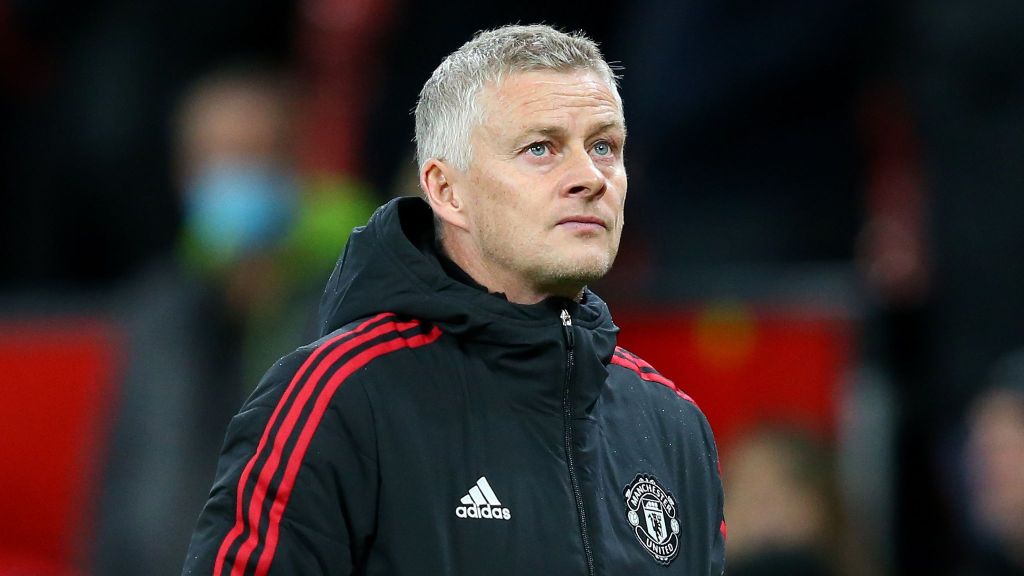
Ole’s at the wheel, but he’s fallen off a cliff – where to from here?

It had been coming, that much was plain to see. When the irrepressible Mo Salah put away his third – and Liverpool’s 5th – of the afternoon on Sunday, there were scenes of jubilation in the Liverpool end – catharsis for a big win at Old Trafford which, despite United’s struggles in the post-Ferguson era, haven’t been too easy to come by. For the United fans in attendance and watching around the globe, there was a sense of shell shock, but also resignation. Was anyone really that surprised? A thumping at home against Liverpool is about as painful a thumping as United can get, but it was a long time in the making.

It’s tough to believe that only 13 games have passed since Solskjaer had guided this team to a 2nd place finish in the league and was gearing up for a trip to Gdansk for his crowning moment – a major European final with United against Villarreal. Sure, it wasn’t the Champions League, but at that time, it didn’t have to be. External observers pointed to warning signs around the team – an overreliance on Bruno Fernandes, a lack of tactical nous in the big games where Solskjaer’s mid-game adjustments were as likely to lose United a game than win it, and some lopsided defeats along the way.

To the majority of United fans, this was all background noise. To focus too much on what wasn’t yet there in the squad was to ignore where the squad had come from and the progress it had made. Much has been made of what the expectations are and should be of a United manager in the past 8 years, and the observations usually fail to take into account that the revised expectation is quite simple – progress. Ole has never been ‘expected to deliver a major trophy’ in any given season – at least, not up until this point. The next manager won’t be ‘expected’ to do so either. The simple fact is this, and it applies equally to City, Liverpool and Chelsea as much as United – up against some of the best managers of this generation domestically, not to mention in Europe, and some of the best squads ever assembled, no team has a divine right to win a league or a European trophy, and failure to do in any given season is not and should not be a sackable offence for any of the top managers.

The devil, then, is in the detail. If you’re one of the so-called ‘Big Six’ and you win the league, great. If you don’t, you get the magnifying glass out and examine the season on its merits. Normally, a manager will survive as long as the team is ‘moving in the right direction’, as vague a concept as that is. Klopp and Guardiola demonstrated this despite taking time to reach the summit of the league. While Solskjaer does not have anywhere near the managerial pedigree behind him as those two, he did have credit in the bank as a club legend, took over with what appeared to be a Midas touch for his first three months, has genuinely progressed the team to be a much better outfit than the one he took over, and up until United made the trip to Poland in May, looked to have the team on an upward trajectory, improving year on year despite the obvious concerns. This kept him in a job, and for these reasons at least, he should be recognised and credited for doing valuable work.

Considering the freefall United have entered into since Gdansk, it is ironic that the decisive penalty on Europa League final night was scored by a man called Géronimo. That match feels like a sliding doors moment at this stage. United looked to be much the better team against an extremely defensive Villarreal team. And then they were out-thought. Unai Emery’s substitutions changed the game to the point where United were hanging on. And still Solskjaer was paralysed, unable to make a change. Marcus Rashford (in fairness to him, injured) put in a display that lives on in infamy and was kept on the pitch. Eventually United got what they deserved. It was also Villarreal, at Old Trafford this year, that telegraphed what was to come in the Liverpool game. That 5-0 could and probably should have been theirs. Arnaut Danjuma will be gutted that he likely won’t get another run at Dalot in the return fixture. In reality, other than the Leeds game where Bielsa offered up the definition of insanity at Old Trafford once again, and the Newcastle game with Steve Bruce already a dead man walking this year, United could conceivably have lost every other game. They have never once looked in control in any game other than those two.

Why has this happened? How did it go wrong so quickly? There are a number of reasons. First, this United team brought back the ‘feel good factor’; that great intangible that was credited to Solskjaer. The flip side of that is that the team thrives and survives on feeling. It is mentally fragile, capable of looking like world beaters with their tails up but with those tails put firmly between their legs at the first sign of things going wrong. Solskjaer’s fallibility being shown up so starkly against Villarreal has appeared to be a major shock to the system, and served to highlight the limitations of United’s counterattack, give-it-to-Bruno approach.

Secondly, Solskjaer’s attempts to correct the course of the ship in the wake of witnessing this have been nothing short of disastrous. It’s funny that one of his potential successors in the job could sum up United’s problems the most succinctly – as Zinedine Zidane said when Beckham was bought for Real Madrid while they lost Claude Makelélé: “Why put another layer of gold paint on the Bentley when you are losing the entire engine?” United can’t control games because they have no engine room. The ‘McFred’ partnership is Solskjaer’s safety blanket – and it doesn’t work whatsoever. McTominay on his own is a good player capable of being one of the workers in a squad such as United’s – a useful box to box player. Fred is nowhere near good enough. Nemanja Matic’s legs have gone. Pogba is disinterested. Donny van de Beek – well, only Solskjaer seems to see the logic in not giving him a chance.

Despite all of this, United did not address this glaring hole in the summer, and went about devising an updated 4-2-3-1 system that would have them dominate games rather than sit waiting on the counter. This has been ruthlessly exposed by Liverpool and Leicester in the space of a week, and it could have been a lot worse. The issues here affect the whole team. What is on paper a decent defence now looks woefully exposed. What is on paper a world class attack is isolated, crowded out, and has too many mouths to feed. When the midfield leaks like a sieve, there are very few (if any) teams you can go out and beat comfortably. When teams can pass so easily between your lines and see how frequently you cough up chances as a result, they know you can be got at, and they have nothing to fear from you, regardless of who is lining up in your attack. The fact that Solskjaer and Murtough knew this in the summer and decided to go for Ronaldo and call it a day was misguided. The fact Solskjaer then decided to crack on and set the team up as though he had actually addressed that problem was lunacy, and has probably cost him his job.

Solskjaer has always looked most comfortable in his managerial tenure on the back foot, both literally and metaphorically. When United can draw teams in and break at speed, they sucker punch them. Solskjaer has outwitted Pep Guardiola multiple times doing this, among others, and had one of the best records in the big games doing this. Similarly, when Solskjaer is personally on the back foot, facing calls for his head and the noise becomes a crescendo, he usually pulls something out of the bag. The second half against Atalanta showed this most recently, and showed how much the players like him and how much players and fans want this to work out, but it is a recurring theme. This counterpunching style of play was always going to suit the United he inherited post-Mourinho, but it was widely understood that in order to take the leap to the next level, this United team would have to go out and dominate games. Solskjaer has not shown he can do this with this United team. In trying to do so without the personnel in the middle to enable him to do so, it is tough to escape the feeling that he has sucker punched himself.

It is difficult to know where United go from here. There is staggering potential in this squad – Rashford, Greenwood, Sancho, Varane, Fernandes and Shaw are top talents with the ability to improve further. There is a crop of extremely exciting youth players behind them coming through. The team (with the exception of midfield) is blessed with players that would be the envy of most clubs. Problems remain – there has been deadwood at the club for so long that it is biodegrading by this point. The attack is going to have some unhappy players in it because there are only so many minutes going. The team lacks belief that they can be one of the top teams. Enough column inches have been devoted to Paul Pogba that it almost feels redundant going over it here again, but he remains a puzzle that may be impossible to solve. There have been fears that the team is essentially ‘unmanageable’ and that it is impossible to keep both the playing squad and the owners happy.

A new manager will have to contend with all of this. It is imperative that United get this next appointment right. Ole at the wheel may well have run out of petrol by this point, but he was at least going in the right direction with the squad, which has undoubtedly progressed. A Mourinho-esque ‘quick fix’ will fix nothing and will undo that work. Ole has stalled the car at a crossroads for United. Picking which way to go next could define the club for the next few years, for better or worse.

What’s ‘good for the League’ is a white elephant in Ireland – Pippo Giovagnoli and Dundalk are proving it

19 August 2020, Szusza Ferenc Stadion, Budapest, Hungary.
NK Celje 2-0 Dundalk FC. 90+5’. Free kick to the Slovenians in a dangerous area.

“Rogers with a save, a double save! …and it’s put into the back of the net. Dangovic the substitute makes it 3-0, that really just adds insult to injury for Dundalk….”

A bad night for the Town. Indeed, it was a bad week for the Town. Vinny Perth was dismissed from his position as manager in the wake of the result, after delivering a league title the season before, and having John Sheridan finally figure out what his name was the week before. Nothing gets the league here going like a good scandal, and almost immediately after Perth had been wished the best in his future endeavours, the inside story began doing its rounds as it always does.

The story goes that Vinny Perth was ostensibly sacked for having the temerity to pick his own team for the match against Celje, rather than follow the wishes of American venture capitalist Bill Hulsizer, owner of the club. All of a sudden, one story started to follow another, and none of them made pretty reading for the men beside the border. Josh Gatt, while having decent credentials on paper including 2 senior caps for the USMNT, was signed off the back of an ESPN write-up on his time at Altach in Austria (As an aside Bill, if you’re reading this, you’d be getting the steal of the century if you bought Danny Mandroiu for just 1 million euros of that Europa League money. Act fast!).

It got worse. Speculation was rife about who would be the next Dundalk manager to try and fill the void in the dugout left by Stephen Kenny. Bohemians manager Keith Long’s name came up, as it did when Kenny left for Ireland. The rest of the league looked on with interest – Dundalk are a team with the pedigree and the means to make a big impact with such a choice. An impact is certainly what they made. After a short search, Dundalk decided to look abroad for their new manager and came up with a name. The name was Filippo Giovagnoli.

Who???

You could hear the laughter from Tallaght already. Dundalk had gotten rid of their league winning manager – himself following up on one of the greatest managers ever seen in Ireland – and replaced him with a man whose previous highest level of experience was running summer camps for children in New York for AC Milan. There would be a genuine debate to be had around whether this was more surprising to Dundalk fans or Giovagnoli himself, who immediately fell prey to another LOI maxim; that WhatsApp messages find their way out in the open very quickly. Giovagnoli described his appointment as ‘crazy, but true’, the task ahead of him as a ‘kamikaze mission’ and asked his friends to wish him luck. Not exactly the confidence you want from the man calling the shots in your dugout.

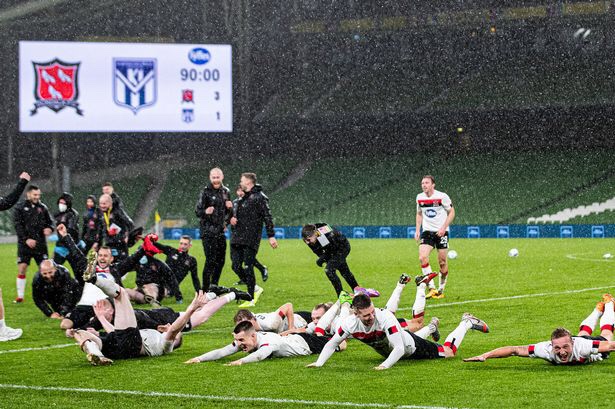
How times change, though. As I write this, Giovagnoli has become only the third manager to guide an Irish team through to the group stages of the Europa League. The previous two ended up managing their national teams within four years of the accomplishment, so Roberto Mancini may start to anxiously look over his shoulder soon. Dundalk will play Arsenal, an Irish team has once again entered the rarefied air of mixing it up with the mighty Premier League elite in European competition. While this is only good for Dundalk, only a fan of the Greatest League in the World with a heart of stone wouldn’t find it within themselves to be just a little bit happy for the summer camp coach who shocked the nation and is living a dream.

It does bear repeating though – this is only good for Dundalk. Three million euros in prize money going to Oriel Park will not make Finn Harps a better team, nor will it be warmly received in Tallaght, Dalymount, Turner’s Cross, the Brandywell, or anywhere else that looks at the bank balance of the Boys in Green Diesel. The converse also applies. The appointment of Giovagnoli was met with laughter from the rest of the league, even though he did have the last laugh. It doesn’t affect the squad and community-building efforts at Bohs, it doesn’t affect the Roadstone production line or Jack Byrne’s performances at Rovers, and it doesn’t affect the support and fundraising efforts seen at Sligo this season, to name examples. To sum up, it does not define the work done by the ten teams in the league.

Across the water, transfer deadline day is on Monday. The biggest story by far of the summer has been the farcical inability of Manchester United to conclude a deal for Jadon Sancho (and rest assured, I’ll be covering this once the window slams shut) and the amateurish nature of their boardroom. If I was to argue on this blog, in the pub, or in work that this is actually bad for Liverpool, as it lowers the reputation of the league and makes them look amateurish by association, and that really those fans should hope that United get Sancho to raise the prestige of the league, the howls of laughter would probably carry across the Irish Sea into the Kop for the next game. And rightfully so – hoping your hated rivals strengthen so that you look good alongside them is a plainly ridiculous suggestion. However, it is an argument frequently applied to an Irish context.

Media coverage of what could be termed a philosophical debate about what is ‘good’ for the League of Ireland has often resembled a conservative think-tank critically analysing how a third world country is an undesirable candidate to receive basic aid packages. We shouldn’t get any money, because it’ll just be squandered on overpaid bad players. However, we should be beating teams that spend several times the amount we ask for – let alone have – as a matter of course, or it will show that ‘the standard isn’t good enough’.

We should make an effort to accommodate those that consider it a pub league lest we be ‘exclusionary’ – despite the fact that most of us do support the very same Premier League teams we’re alleged to hate and look down upon – but should also constantly be mindful of not throwing up the absurdities that a league campaign tends to. Bohs beating UCD 10-1 was ‘bad for the league’ and full media articles and podcasts were devoted to the reputational damage caused by the result. Seemingly, it was the extra goal apiece for Bohs and UCD that really set it apart from Southampton 0-9 Leicester.

Pippo Giovagnoli’s ‘kamikaze mission’ will mean he probably never has to buy a pint in the Town again. However, this too was ‘bad for the league’, and covered as such, as it feeds into the ‘pub league’ narrative. He doesn’t even have his UEFA coaching badges. ‘Neither does Andrea Pirlo’ was a response seen this week, but this fails to recognise that Paddy Power tweeted that he has many leather-bound books. So that’s different. In any event, we’ll only have to watch Juve play Inter if Sheffield United v Brighton isn’t on at the same time, so not to worry.

Giovagnoli was bad for the league’s image, there’s no doubt about that. However, if you go up to Dundalk this week, ask them if they’re concerned about that. Furthermore, ask yourself if they should be. Giovagnoli was good for Dundalk in the end. That’s all that matters. That’s all that should ever matter.

We should never ask our teams to consider the respectability of the league as a whole in taking courses of action that will only benefit or hinder them. In doing so, we take away their agency. We wouldn’t send a relay team tied together to run the 100 metre dash at the Olympics, just the same as we shouldn’t make our teams run together to improve themselves individually. We should be giving them the tools and the support to improve themselves. Measuring the league against our neighbours in a quest for respectability, who consider a league that provided two Champions League semi-finalists in the year just gone a ‘farmers league’ will always be a fruitless endeavour. In the end, if it was good enough advice for Pippo Giovagnoli’s job interview, it is good enough advice for the league – don’t worry about the rest, sometimes it’s best to just be yourself.

This time next year Rodney, we’ll play like continental Europeans….

Bulgaria 1-1 Ireland. Ireland 0-1 Finland. Not quite the brave new start we had hoped for.

It has to be said, the cold facts make for grim reading. 1 goal scored. From a header. At a set-piece. From our centre half. The only goal scored in two games during the greatest tactical revolution Irish football has seen since Big Jack came once again from the man who still remains our primary defensive leader and primary attacking dangerman.

Lukas Hradecky will scarcely have had easier days at the office than he did yesterday. At the other end this week, Bozhidar Kraev and Fredrik Jensen will echo similar sentiments. A simple ball through the middle between the two centre halves made Kraev’s job a simple one, and Jensen barely had to flick a leg when coming on before he made the decisive intervention in yesterday’s game. Toothless in attack, shapeless in defence. That doesn’t tell the whole story, of course, but then again, when did the whole story ever get in the way of a good story?

Ireland is a country where very few things are left politically uncontested if we can help it. We can dislike each other based on religious and political differences – even if many of us aren’t even precisely sure what those differences are – and even the terms ‘Ireland’ and the FIFA definition of ‘Republic of Ireland’ are contested in so far as they can mean very different things depending on who you talk to, in any part of the country. We simply don’t tend to agree with or trust each other very often on the things that matter most to us, and an Irish popular discussion can very often take the form of two polarised sides with competing agendas trying to shout the loudest.

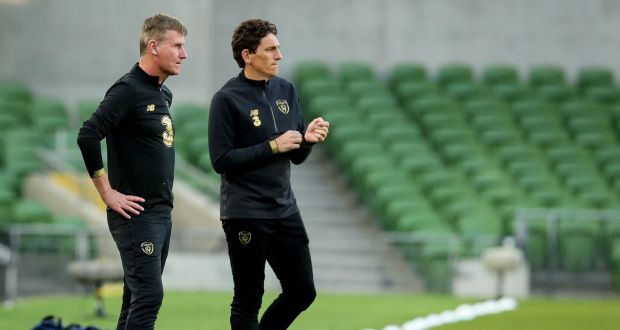
Enter Stephen Kenny. It is actually somewhat ironic that Kenny has become caught up in becoming one of the most polarising Irish managers in recent times, given that he is very affable with a mild temperament, and ‘Ireland manager’ has become one of the few uncontroversial prominent posts in the country recently, such is the apathy towards the Irish senior team both due to their results and the bloated, disorganised feel to international football since the halcyon days of Paris, Bordeaux, Lille and Lyon in 2016 (though we ourselves benefitted from that competition being expanded from 16 teams to 24). A nice man has been dropped into the Ireland job when Ireland haven’t kicked a ball in anger in nearly a year – and all of a sudden everyone is angry again.

The problem with Stephen Kenny and why he divides opinion has nothing to do with Kenny himself – mostly. To many, his record is light, and he is the 20-0 heavyweight boxer getting a shot at the title whose record is full of wins at nondescript casinos against names you can hardly pronounce, much less recognise. Success in the League of Ireland, no matter that he took a team in trouble and turned them into among the greatest teams the league has ever seen, will never be enough to some – a relegation from the SPL with Dunfermline will not have helped. Similarly, his success with the U21 team could be seen as easier due to the decreased proportion of pressure – sometimes he could rely on Aaron Connolly as he did twice this week, sometimes the senior team needed him, and from this alone the level of importance of each team is apparent.

It really doesn’t require much of an analysis to explain why this approach to judging Kenny is, at best, a wildly unreliable one. If Ireland hired a manager whose last three posts were a sacking at Adanaspor, a liquidation at Tirol Innsbruck and a brief time in charge at Austria Wien, there would be uproar – Eamon Dunphy has savaged much more decorated suitors for the job as a light snack before a Champions League group stage game before. However, I am sure the dark days of Adanaspor were quite far from Joachim Low’s mind when he lifted the Jules Rimet Trophy in the Maracana stadium in 2014.

A more pointed comparison is that one of the most decorated managers of all time, with six Scudetto titles, a European Cup, two UEFA Cups and a UEFA Cup Winner’s Cup could not get the Republic of Ireland to perform as well at Euro 2012 as Northern Ireland in Euro 2016, with a significantly less talented player pool under a man whose previous biggest achievement was reaching the group stage of the Europa League with Shamrock Rovers. Northern Ireland lost to a Wales team on an historic run in that Euros, and Chris Coleman’s reward for bringing Wales to the semi-final of Euro 2016 was to be a punchline as foil for the magnificent Martin Bain on Series 1 of Sunderland ‘Til I Die – sending them down to League One. In short, all this is to say that we should be careful not to overestimate the correlation between club football and likelihood of success in an international role. Kenny’s record at club level will never be enough to some – we should just be thankful they are not making the decisions for the Ireland team.

There are many who do not have a problem with Kenny’s record but rather feel that Mick McCarthy was unfairly forced out. Again, this does not require too much consideration or discussion. In the spirit of Stephen Kenny, let’s bring it back to the League of Ireland to answer this one. Dundalk, Shamrock Rovers, Bohemians and Derry City were, for a period, invited to consider donating some of their own earned money in order to fund the return of the domestic league. In this context and backdrop, if anyone had 1.5 million Euros lying spare for Mick to sit and prepare for the Slovakia game for another year, it would’ve been more prudent for them to speak up at the time.

If we accept that Kenny is here, he is here validly and he should be given every chance to fairly show what he can do, the results so far have been mixed, which is probably a kind way to put it. The half-joke has been the same from the second he was announced, as a sarcastic, eye-rolling refrain from his detractors and a quiet, unrealistic dream from his supporters – ‘we might end up playing like Barcelona, lads’. We are attempting it, but so far it’s all looked a bit more “I see yer da is taking the divorce well” than a genuine new-look, new and improved Ireland. Ireland are different under Kenny. Very different. That much is not in doubt by anyone. We have been better over these two games in some areas, and worse in others.

Let’s start with this – this is an embryonic team for Kenny. This time last week, he was meeting many of his players in person for the very first time. We are trying to unlearn a system that has been established as the way to play football in this country for decades, ever since Liam Tuohy found his U19 half time team-talk interrupted by an irate Jack Charlton coming to ask the players why the ball wasn’t being sent long in February 1986. Kenny has only had a week to change 34 years of this. Martin O’Neill, as talented a motivator as he was, did not coach corners. It showed. Mick McCarthy presumably needs extra storage space for all of the hands he’s bitten off for a draw in the past two years, not to mention the ones he’s said he would have bitten off if given the chance. Pragmatism and making the most of our limited side has been the norm for all of our lifetimes. Now, we are chasing idealism. Now, we are chasing the idea that we could be something more than accepting a draw against every semi-decent team we face.

It will all come down to the players we have, or it will come to nothing as we don’t have the players. Player buy-in will not be a concern. Much has been made of the dressing room that did not take to the last LOI manager to succeed Mick McCarthy, but Brian Kerr walked into a much more illustrious dressing-room after a much more controversial sacking with a much more self-confident team. It is as simple as the last three Ireland managers have spoken about limitations. Kenny speaks about possibilities. Any player that fancies himself as a decent player would rather hear what Kenny has to say, and will respond better to being challenged to express themselves than being told to hide their limitations at all costs.

Player quality then, will be everything under Kenny, and this is where the concern lies. We may be in a pandemic pre-season and many players may be struggling for fitness, but the results nevertheless are concerning in defence and attack so far. Attack has been reduced to frustration, occasional glimpses of quality but more almost-chances and half chances than any actual incisiveness so far. This is a slightly lesser concern, because quite simply, we are still going to get set pieces and none of our lads have shrunk between November 2019 and now. We have not created a great deal from open play in a long time. Progress in this area is a criterion that Kenny will ultimately be judged on, but the cost of playing a different game is not yet felt as keenly in what was already a profligate attack.

Defence is an area where Kenny will have less time, and less forgiveness. Shane Duffy, despite remaining our attacking dangerman, looks lost in defence when he was previously a reassuring and towering figure. In the two games, he hasn’t been quite sure of where to be, never quite sure how far to take the ball, and always a little bit slower to take up a good defensive position, which has cost us already. Enda Stevens and Matt Doherty have taken to their roles as modern full-backs with inconsistent results. Many of the midfield have given decent performances but have lapsed in concentration at crucial times – Finland’s goal came from an unforced error, and Bulgaria’s came from a simple pass through the middle.

The lack of a dedicated number 6 or a ‘sitter’ in what looks a dynamic, shuttling and younger midfield trio seems to be giving the defence the jitters, and gives Glenn Whelan shaped rockets for people in the media to fire at the management (No, we are not going there. He is 38 and plays for Fleetwood Town). Josh Cullen could be a solution in this role in the longer term, but it is a short-term problem that must be fixed. On the midfield more generally, the passing has notably improved. Ireland have doubled their passes and greatly upped their accuracy on these, but at times it has looked a bit like the ‘sterile domination’ of the bad days of United under Van Gaal – keep the ball in the middle third while the more cohesive, less possession-obsessed opposition coils like a spring waiting to punish. Confidence to play a pass and show for a pass rather than going long has been instilled. Confidence to play a killer pass is next, but that is much more of a question of ability.

A very good point was discussed during the Finland game on Sky – which is the effect of closed doors on Ireland. It is difficult to imagine an Ireland team having the confidence or temperament to play ‘nice’ but error-strewn experimental football in front of a packed Aviva – as much for the adrenaline that this may bring as any crowd criticism. When the crowds return, we will see a true test of Kenny’s system and the ability of the players to execute under pressure in Dublin and on the continent.

Kenny’s team has shown plenty of reasons to be optimistic. Ireland can with some justification claim to have been the ‘better team’ generally against both Bulgaria and Finland. Paradoxically, many who believe we ‘don’t have the players’ would have Kenny judged by the barometer of instantly becoming a ready-made world class international team. We are clearly far from there. We do not have any right to beat a Finland side that will not need any playoff to be a team that could await us in the Euros, if the Slovakia game and a potential final go to plan. We may not regard Bulgaria as up to much, but they would be well within their rights to say the same about us. We’ve written off better sides than both ourselves and them in recent memory as eminently beatable. We generally had the better of the play in both games, particularly in Sofia. Conceding chances is a major concern, but creating some with good play, albeit not yet at the frequency we would like, has been a positive. The fine margins have gone against Ireland in both games, but we are trying to play a pleasing, technical, continental European style of passing football, and have controlled play against established European sides doing so. Aaron Connolly could have been responsible for three goals alone over two evenings, and we would be discussing a different story. But he wasn’t and we aren’t.

Such fine margins will define any manager’s tenure of a country with our footballing pedigree. The problem with Kenny managing Ireland is that we are – in some ways – more demanding than the big nations. England, Germany, Brazil or Argentina could pick their Stephen Kennys to manage their national team and afford a few stutters while qualifying anyway (Eddie Howe anyone?) Being a big nation with world class players insulates you, the same way it doesn’t matter how badly run Barcelona, Manchester United or AC Milan are, they will never drop below a certain level. Ireland need time to implement what Kenny wants, but they also need to ‘win now’, in Bratislava next month. If Ireland do not create enough and lose to the Slovaks, the scepticism around Stephen Kenny may turn into open calls for his head. He is going to have to try to get instant results while progressing his long term strategy.

It looks like the debate may rage on for a while yet.

RotenBullsport Leipzig, Doha Saint-Germain and the ‘caring’ conundrum

As I write this post, a long underrated team of underdogs is celebrating achieving their just rewards, rightfully being praised for world class excellence in the field of football, and has a Champions League final to look forward to, to top it all off.

But enough about RTÉ, I’m here to talk about two other three letter abbreviations that are almost as controversial as what comes out of Eamon Dunphy’s mouth; PSG and RBL. The game that occurred last night between the boys from Paris and the boys from Leipzig.

Let’s start with PSG, because to be frank, it is easier to explain why they are repugnant in the eyes of the football fan, or indeed any casual observer. They are one of only two clubs in the world owned by a state (in the literal sense, though more on that later), and an über-wealthy Gulf state at that. As Richie Sadlier stated last night, they are a team that through their successes legitimise in some way the human rights abuses that take place in the Qatari state and that this is quite transparently the objective aim. It does not require further explanation as to why the ownership of the Qatari government of a Champions League finalist is problematic.

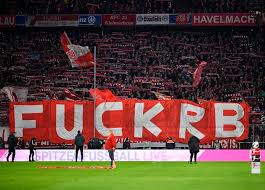
When trying to explain why ”Lawn Ball Sports Leipzig” are as repugnant to football, as many have done this week when this unholy semi-final was created, it is tougher. Red Bull do not advocate for the criminal punishment of homosexuals, as far as I am aware. They do not imprison or torture journalists. They do not even spend all that much to distort the game – their entire team last night cost less than the most reviled player in the world playing at the equally reviled PSG. They play football the right way, they have an exciting and progressive manager, and an electric young squad. They have provided a true contender from the former German Democratic Republic, often seen as left behind both in football and German society. They did so in a major city which was one of the worst underachievers in Europe in terms of footballing quality – Leipzig was, for a period of time, the biggest city in Europe with no team in the top three leagues domestically. And yet, to many, they are worse than the Qataris.

The reason for this is relatively simple – RBL do not care about football. One bit. Red Bull’s owner, Dietrich Mateschitz, has effectively said as much – on record as promoting the brand of Red Bull through the medium of Leipzig the city, and RBL the club as its primary aim. Their movements in German league football have been offensive to local fans in a way PSG have not. ‘Buying the league’ is a familiar refrain to fans the world over at a hated, wealthy club. ‘Destroying the fabric of our league’ is a relatively new one. They have done this in multiple ways – maliciously subverting the German membership ‘50+1’ rule so that effective power is consolidated in a very small handful of wealthy Red Bull stakeholders, literally buying a club (SSV Markranstadt) in order to absorb their registration rights, and showing outright disrespect and naked corporate ambition in the one major league that remains committed to the idea of football as a social and institutional hub.

There is a reason why Nick Hornby’s anecdotes of being thrilled, depressed, exhilarated and deflated week in, week out following Arsenal became so wildly popular and revered among football fans. He is us. We are emotional and irrational about our football clubs – I personally think that whatever price Bohemians are to win the Europa League is too high, and I haven’t even looked at what price it is yet. RBLs cold corporatism is a slap in the face to people who think like Nick Hornby and to people who dream about football like I and millions of others do. It is also not quite an accusation you can level at the Qataris – while I doubt the Emir of Qatar is checking the fixture list for ‘when we get one over on those Marseille c**ts’, there is a reason why roughly 400 million Euros were spent on Neymar and Kylian Mbappe. Football is incidental to the Qatari project – we all know that. The problem is that they nevertheless do still act like a team that wants to be the best in the world – they’re in the Champions League final, and whether they succeed or fail in any given season, they are covered with the same gusto as any top European team. Regardless of what RBL do or don’t do with their team, their success is explicitly stated to be a means to a marketing end.

This is the argument boiled down to its essence – yes, PSG’s owners are worse for humanity as a whole, but RBL’s owners are worse for football. In any event, most are in agreement that both are akin to a cancer on elite European club football, and almost all are in agreement that both should be stamped out. Does this argument hold up? Can RBL really be mentioned in the same breath as PSG in terms of poisoning the game? Could they actually be worse for football? And most importantly, where is the line?

As a Manchester United fan, I followed the Manchester City case in front of the Court of Arbitration for Sport with some interest. I did so for all of the wrong reasons, as did many United fans, and indeed many City fans. For me, the result was crucially significant in determining whether or not 5th place would be sufficient for United to obtain Champions League football in the season just gone. If United did not get Champions League football, they would not be able to present Borussia Dortmund with an offer of up to 120 million Euros for Jadon Sancho. It now looks like this deal will not happen anyway. United’s major transfers get signed off on by a family who have already signed off on the acquisition of Tom Brady and Rob Gronkowski this year, not to mention the historic donations to Donald Trump’s political ambitions, and have taken over a billion in revenue generated by Manchester United out of the club. Belts will need to be tightened somewhere, and it won’t be in the country the capital and the decision makers are located. For this reason, I and many other Manchester United fans wanted the Court of Arbitration for Sport to rule that City had breached Financial Fair Play Regulations and would thus be banned from Europe.

Manchester City (the only other literal state-owned club, owned by the Emirati government) and Pep Guardiola see their victory over CAS as something to be celebrated, a lesson taught to an inert, myopic elite full of old white European men jealously guarding the keys to the castle for the same old clubs. They see UEFA as a rival almost on a par with historic rivals Manchester United and new competitive rivals Liverpool, openly boo the UEFA anthem at their games, and co-opt the ‘UEFA Mafia’ slogan adopted by ultras at faded European giants in less glamorous footballing countries, faded precisely due to the acute concentration of eye-watering wealth in the elite leagues. Once again, a footballing principle intended to be for the have-nots has had its message corrupted by one of the richest clubs in world football.

Strident criticism of this ruling came in the form of a manager who came to define football rivalry for many years at the highest level alongside Guardiola – Jose Mourinho. They defined such rivalry at Real Madrid and Barcelona – both of whom receive sizeable support from state and local government respectively. Indeed, Real Madrid and Barcelona is a geopolitical struggle as much as anything that goes on the pitch. It is not exaggeration to say that the most successful club in European history is effectively a state-run club – though it is not literally one. To many, seemingly including Mourinho, this artificial distinction makes all the difference.

One of the most powerful images of the struggle for Catalan independence was that of Gerard Pique breaking down in tears asking for his right to vote. Barcelona released a similarly emotional statement echoing similar sentiments. Pep Guardiola wore a yellow ribbon supporting Catalan self determination and was censured by the Premier League for the ridiculously arbitrary ‘bringing politics into football’, though as we all know, a red poppy supporting British military operations is an apolitical gesture. What Guardiola should have been charged with is rank hypocrisy, given the irony of this political stance in that Manchester City dugout.

I could go on. There are endless examples of the hypocrisy of football clubs and governing bodies on political and financial matters. The fundamental question is this – how do we decide which teams are ‘worse’ than others? At present, RBL are reviled due to their blatant disrespect of the German system, but is it really any worse than the fact that a man with ties to the Russian government owns an English club with a sizeable and increasingly politically vocal right-wing contingent? Is it worse than a club whose owners are just as indifferent to the game, enact draconian policies in their home states and attempt to legitimise this through sporting excellence, but see winning the Champions League as their state foreign policy benchmark, rather than simply creating a good team for a drinks brand? Is incidental care for football better than no care at all?

In any event, lets hope that football’s order is restored by the richest German club fresh off winning their eighth consecutive title. If PSG do manage to kill off football, there’s always the European Super League.

Design a site like this with WordPress.com
Get started